Yes, these ostriches with their heads in the sand, irritate me no end. I find it impossible to separate art from the artist or the culture that created it. It amazes me that formalist critics ignore these important factors. Postmodern critics are the worst. There is a certain degree of arrogance in their approach. Their assumption is that even artists don't understand their own creations. As with glossolalia, they believe an interpreter is needed. This state of affairs isn't completely the critics' fault.
In the early 20th century, artists wrote earnest manifestos explaining what they were trying to do. Unfortunately, this practice was abandoned as artists took on the role of idiot savant. Artists became mute or provided misinformation. Formalist critics were the result.
Showing posts with label art. Show all posts
Showing posts with label art. Show all posts
Wednesday, January 16, 2019

Monday, May 18, 2015
Unit 1: Abstract Art Is Art
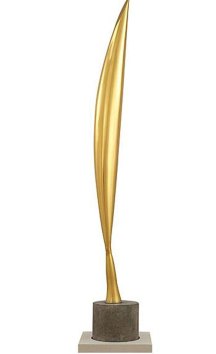 Many people reject abstract art as art because the subject is difficult to discern or totally non-existent. Interestingly enough, there is a legal precedent from 1927 that states that abstract art is art. In Art on Trial: From Whistler to Rothko, Laurie Adams describes the trial, Bancusi v. United States. An American photographer, Edward Steichen, bought Brancusi's Bird in Space. When the sculpture entered the United States, a customs agent charged duty for the sculpture. To add insult to injury, the sculpture was placed "under the classification of Kitchen Utensils and Hospital Supplies." Original works of art are duty-free. According to the customs agent Brancusi wasn't an artist and therefore whatever he created wasn't art. Incensed, Steichen appealed the decision. Expert witnesses testified as to whether Bird in Space was art. "Both sides in the case evidently agreed that the Bird in Space was an original, nonutilitarian work by a professional sculptor. The weight of the judgment finally focused on a much more important issue; whether the government could dictate taste." The judge concluded that abstract art was art. The judge's decision indicates that the government and customs agents are not the arbiters of taste for the United States.
Adams, Laurie. Art on Trial: From Whistler to Rothko. New York: Walker, 1976. Print.
Friday, April 3, 2015
Understanding Art
"Everyone wants to understand art. Why not try to understand the song of a bird? Why does one love the night, flowers, everything around one without trying to understand them? But in the case of a painting, people have to understand." Pablo Picasso
Does Picasso sound a little irritated? You bet. He was one of the first abstract painters and was getting tired of answering questions like "What is that? or "Why did you paint that?" He is basically stating that he isn't going to answer these questions.
Picasso's statement equates art to nature. We don't question a beautiful sunset so why should we question him about his art. He is basically stating that we should stop asking questions and just look at the painting and appreciate it. He is defining an artist as a force of nature. Many artists would agree.
Some artists that are tired of answering questions will resort to misdirection. For instance, Andy Warhol when asked why he painted Campbell's soup cans stated, "Because I like soup." This may have been true but was this really the reason why he did paintings of soup cans? To understand Warhol, you have to look at more than just a few paintings. You have to look at a body of his work and you have to pay attention.
Picasso and Warhol have shifted the burden of understanding onto the viewer. They are making it clear that we won't get any answers from them. They want us to look at their artwork and actually see it. If we want to know more, we will have to do the research ourselves.
Subscribe to:
Posts (Atom)